What are the symptoms and treatments of uterine fibroids?
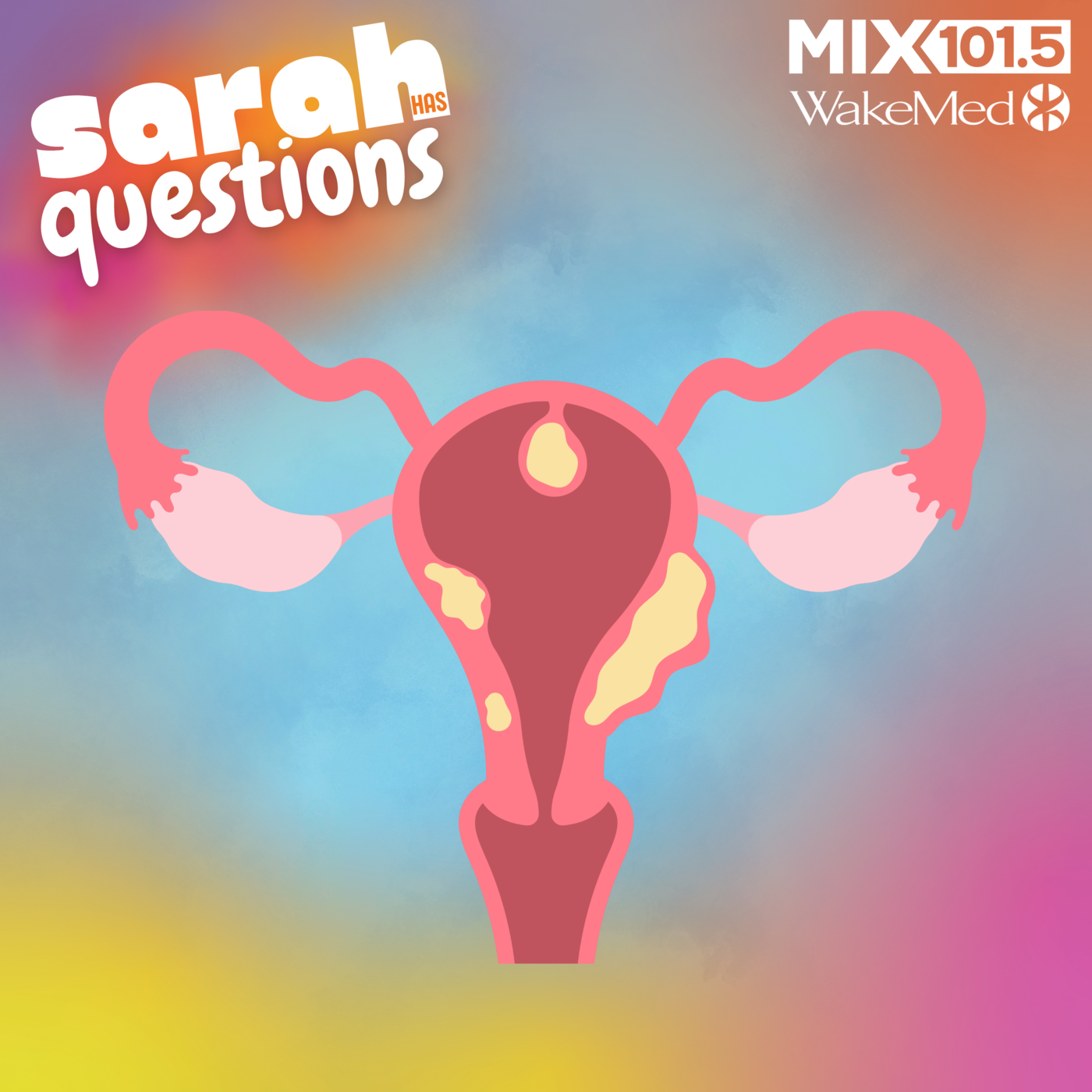
...and why you need to talk about it with your doctor


 RSS Feed
 70-80% of women will develop uterine fibroids! These non-cancerous growths can cause a lot of problems, especially if you're pregnant or trying to get pregnant. Some people never need treatment, but others experience heavy bleeding and pain. Sarah King has tons of questions about uterine fibroids! Her guest in this episode is Dr. Michael Armstrong from WakeMed. You can find out more about him and WakeMed Women's care at https://www.wakemed.org/care-and-services/womens
Send us your episode ideas at www.wralfm.com/sarahhasquestions.
DISCLAIMER: The information presented in this podcast is intended to be educational and nothing said by the host or guests should be taken as medical advice. The information presented here is not a substitute for professional medical advice, diagnosis, or treatment. Your health is important, and seeking the advice of your own healthcare provider is always the best course of action.
0:00 Periods, endometriosis, pelvic floor issues, PCOS, it's a barrel of monkeys down there. So much going on. Let's add uterine fibroids to the mix. That's what we're talking about today. What are uterine fibroids? Where do they come from? What happens if you happen to have them? Welcome to Sarah has questions. Those are 3 of the many questions I'm gonna ask. Let's get into it. I'm Sarah King, and I have a lot of questions. What exactly happens when you orgasm physically? Will popping a knuckle or a joint give us arthritis? What can we learn from our poop? The size of your body doesn't necessarily indicate your measure of health. Yes. And what are your thoughts on that? Cleansing. Do we need to do anything special to our nether regions?
0:45 In this show, I get to ask all these questions to WakeMed doctors who happen to know everything about everything. Sarah Hess Questions is a production of Capital Broadcasting Company and Mix 101.5. It's presented by WakeMed. Today, I have doctor Michael Armstrong who's an OB GYN with, WakeMed. Thanks for coming in today. Thank you for having me. And we're talking uterine fibroids. What exactly is a fibroid? Uterine fibroid is basically a muscle tumor of the uterus. The uterus is made up of smooth muscle, and then sometimes you can have, like, a modern mutation of 1 of the basic cells, and then it grows. So as it grows, it grows into a little small, like, tumor ball, and that tumor growth is called a fibroid. Fibroid. Interesting.
1:31 And and where do they grow on in the body? Just inside the uterus? Inside the uterus. And with the uterus, that means they can grow, like, outwards from the outer part of the uterus and exert pressure on other things within the abdominal cavity. They can grow inside the womb, so they can grow very, very close to the cavity where women, they start their menstruation. Mhmm. And they can be anywhere in between. We've talked about endometriosis before, which is, you know, where parts of the lining will grow everywhere. Can so does that mean fibroids can grow, like, on the ovaries, on the fallopian tubes, anything like that, or just the uterus? That's more rare when you kinda have what we call a parasitic fibroid. If it grows, like, on a tube or anything, that's what we consider to be extra uterine. That's more rare because it usually derives right from those basic muscle cells. I see.
2:20 And then that one mutated cell, it just grows and grows and grows. So they can push like, outward towards the tube. They can push in towards the womb, like, where a baby would be. Mhmm. And they can be anywhere from the bottom of the uterus to the top of the uterus. Oh, man. And that's usually what we see. Okay. But parasitic fibroid, that that sounds scary. So what causes fibroids to grow? That's a good question with a complicated answer. I mean, honestly, we really don't know. We don't know what causes that basic mutation, but, what we know from a lot of science that's been done and studies that have been done, A lot of patients sometimes can have hereditary type fibroids so they can run-in some families. That was my next question is if it was genetic. Yeah. Sometimes they are. Some patients for whatever reason, whatever stress happens, they have a fibroid that stars that start and a lot of times you can see, like, the same cells in certain type of fibroids. There's a lot of patients that have fibroids.
3:18 We usually see the patients that have significant size fibroids that cause them problems and that's why they come and see a doctor. Right. So you said stress. What do you mean by that? Like a stress can cause a fibroid? It can be and and that can be anything. Could it be from an infection? Could it just be from normal stresses of life? Could it just be just as you get older in your reproductive life? Yeah. It's something that critical that happens that causes that mutation to happen. And that's the part the complicated part. We really don't know what that is. Oh, interesting. Stress really is the bane of all things. It is. So you're saying these things start from a mutated cell. Yes. Is that the same as cancer? It's similar, but very, very different because fibroids are benign. And as majority of women have fibroids, I would say about 70, 80% of women in their lifetime, they'll develop fibroids. Okay. And we see maybe about a quarter of those women because those are the ones that have significant ones that they either have significant bleeding with their period Uh-huh. Or they have pain with their periods. Okay. Or they may have infertility during their reproductive life. Okay. So even though a majority of women have fibroids, it's only a certain percentage that usually have ones that cause problem. Cancer cells grow, and they grow They do. Yeah. And they grow on each other, and they they build tumors too. They do. So how is it different with a fibroid than a cancer? Like, what what differentiates the 2 types of cells? With cancer, they're they're prone to try to invade.
4:43 So they'll invade other structures. I see. Whereas with fibroids, with that mutated cell, it kinda stays the same and it kinda grows within itself. Fibroid? Does it just stay there forever? Does it shrink and go away? Does it fall out? Like, what does it do? It does pretty much all those things you just said. You can have a fibroid fallout? You can. You can have a fibroid that grows within the womb of the cavity and it can prolapse and it could come out. Now you may need help. You may need surgery to help that fibroid to release and come out. But that is possible. Oh, interesting. Yes. But fibroids, they change. They get bigger, they get smaller. It's common during pregnancy. We see fibroids early in pregnancy actually enlarge and then at the end of the pregnancy, they get smaller again. Usually with menopause at the end of ambulatory function, usually fibroids, they get smaller because they are fueled by the hormones that the ovary makes. So that's fairly common also. They don't usually go away typically, but they may not cause problems as you get into menopause. What are the symptoms of having a fibroid? Usually, the most common symptom, I think, for the patients that I see is usually heavy menstrual bleeding. I would say that's probably the number one number one reason why the majority of patients come in because of heavy menstrual bleeding. What are some other ones? Other ones could be discomfort and pain with their cycle or outside of the cycle. Other ones could be they sometimes they can get to be really, really large.
6:09 A lot of times we kind of equate the size of a fibroid to pregnancy size. So, like, we'll tell a patient, you know, you have a fibroid that's, like, 20 week size. Good. So that'll be the same for a patient who is 20 weeks pregnant. So that is noticeable. So when when a patient has something like that, sometimes that's why they come in. So why would a fibroid cause heavy bleeding? Probably most likely the the size of the fibroid and the location. The fibroids that are closer to the endometrial cavity are most likely to cause more bleeding issue, and especially the ones that are actually inside of the womb. The ones in the womb are common for cause of abnormal bleeding. So so whenever you have a fibroid in your uterus and it's time for your cycle, you grow the lining. Yes. Is it because you have to grow more lining to cover the fibroid? Not necessarily. With the uterus with the muscle, the uterus is designed to cramp, and a lot of that cramp is to try to control and stop bleeding. So if you have these muscle tumors, you can imagine the uterus doesn't cramp and contract as well. Right. Doesn't contract as well. So that could lead to more bleeding.
7:11 I see. Then if you have this tumor and it's just in the area right where the administration is, just being in that area is gonna cause more bleeding. And some of the fibroids, majority of fibroids actually in the actual cavity. I see. So having the actual fibroids in the cavity can cause irregular and heavy bleeding. We'll be right back because you know I have more questions. How do you diagnose a fibroid, a uterine fibroid? Yes. Sometimes it can be by physical exam. The larger ones when the patient comes in and have a pelvic exam, sometimes the physician's able to palpate it. A lot of times Palpate means? You're able just on your exam, like, with digital exam, you're able to actually fill it. Oh, yes. You're able to fill it. Women are familiar with the digital exam. It's like you're getting molded into a shape. Yes. Yes. Yes. So you're able to fill some of the fibroids. Yes. With technology and the advancements we have with radiology and imaging, the most common image that's good for looking at fibroids is ultrasound. Okay. So ultrasound is excellent for looking at fibroids, the ovaries, and most of the female organs. Okay. There's some limitations to ultrasound, but ultrasound, it will give you an idea about the number of fibroids. It'll give you an idea basically about the location of the fibroids. Sometimes you may need a better test. So with ultrasound, it may not tell you exactly what's the impact of that fibroid on the actual cavity of the uterus. And that's important. So sometimes we can do studies such as hysteroscopy. And that's what What is that? That's where we
8:42 put a scope inside of the uterus. Okay. And with distension, usually fluid distension, you can look inside the cavity. A lot of studies a lot of women know about because of fertility and infertility is HSG. What does that mean? Histosalpingogram. That's where a radiologist uses contrast. They inject contrast into the cavity and they just shoot x rays. And with the contrast, you can see the shape of the cavity. And if there was a fibroid in the cavity, it would show up as an abnormal shape. Sometimes MRI. Oh, that makes sense. The MRI is very helpful for telling you in a three-dimensional way exactly the location of the fibroids, the number of fibroids and where they locate. This is a little off topic, but on just a backpack on that. What is the difference between getting an X-ray and an MRI? I always thought I really don't know the answer to this. Yes. X-ray is kinda what we call just plain film. So you're just shooting pretty much in that one dimension. So it's like from anterior to posterior. Okay. Whereas with MRI, it's a magnetic resonance, sometimes with a contrast or without contrast. So they can see the vasculature better. And with You can see your veins. You can, you can. And with that, you get more of a three-dimensional look. But MRI, CT is also can give you a three-dimensional look. But MRI is better for looking at these soft tissue structures Oh.
10:00 Such as the uterus and ovaries. That makes sense. So you can get a better look at your muscles and those things. And x rays are good for bones. Yes. Gotcha. Okay. Are symptoms always worth worse with a larger fibroid, or do smaller ones cause terrible symptoms too, like lots of bleeding? It depends on the location. Now it's more common for the larger ones who cause more symptoms because the larger ones can generate more pressure. And sometimes that pressure can just be frustrating, especially if that pressure is pushing on your bladder. Oh, yeah. It makes you have to go to the bathroom all the time. Exactly. That's can and it can, I would imagine, shrink the size of your bladder? Not not, like, literally shrink, but, like It doesn't allow the bladder to expand Exactly. The way your bladder is designed to expand. Yeah. You're exactly right. So what age does fibroids typically become an issue? We usually see it when patients are kinda in their thirties to forties, definitely in the reproductive ages. But it's rare that you see younger patients, like, in their twenties having major issues with fibroids. It's possible, but that's not the usual. And after you go through menopause, you said it gets better? It does. Thank goodness.
11:00 Finally, something positive about menopause. Because we had a menopause episode. Let me tell you. Not not to look forward to in this that realm. But no more periods? I know. And that is, that is a blessing. That is a blessing. During pregnancy Yes. What can happen to women with fibroids? During pregnancy, typically, like in the early part of pregnancy, I would say between 10 to 20 weeks, that's when you see most of the growth of the fibroid before it stables out. That increased growth sometimes can be painful. Fibroids, they depend on the blood supply. And if they grow fairly quickly and the blood supply cannot keep up, it can cause what we call degenerative pain. So degenerating fibroids are pretty painful.
11:42 Pregnancy Is it feeling like a cramp? Intensely. Oh, yeah. Really like a spot. Like a It's kinda like if you took a rubber band and you wrapped around your finger real tight. Oh. And you didn't take it off. Oh. Yeah. That type of pain. Yikes. Yeah. And so if you have, like, a giant fibroid, I mean, is there even room for a baby? There is. There is. It can lead to the baby not being lining up correctly when it's time to deliver. So a lot of times, we can see the baby is what we call not head down, so we call it non vertex. Mhmm. So fibroids are a risk for cesarean delivery. It also maybe sometimes can lead to preterm delivery. If you have really, really, really large fibroids, that's possible. Sometimes it can obstruct the way for the baby to come out. Even if baby's head down, they may not be able to navigate past the fibroid for vaginal delivery. Well, thank God for cesarean. Yes. I mean, that that solves that problem. You can go in. And would you take the fibroid out along with the baby? Not necessarily just because the amount of blood that could be lost during that time. Yeah.
12:42 That's true. Sometimes it's necessary, but we try to avoid that if possible. Oh, man. So if you are have a history of fibroids are and you have and you know that perhaps you know that you have fibroids when you become pregnant, are you then a high risk pregnancy? It it depends on the size, and it depends on the location. I see. If you've had prior surgery because your fibroids, most of those patients could be high risk. There's a type of surgery to remove the fibroids. Sometimes you should not have a vaginal delivery. Alright. Well, let's move on to some treatment options. I read about something called UFE. Yes. Uterine fibroid embolization. What is it, and is it effective? It's very effective. Uterine fibro embolization is a technique where a specialist in radiology or interventional radiologists, they're able to put a catheter through your vein in your leg. Okay. They thread that catheter. So it's going through major vessels and they're locating the blood supply to the actual fibroid. Oh, interesting. Once they locate that blood supply, they're using particles to basically knock out that blood supply to the fibroids. What do you mean by particles? They use different materials and these materials actually plug the vessels.
13:59 Interesting. So you is it a camera they're putting up through there? Basically, with contrast. I see. With contrast and what we call fluoroscopy. So it's like real time x-ray the whole time. With the contrast, they're able to see the vasculature. The contrast in my mind is ink. I know it's probably not ink. But in my mind, you're shooting ink into our bodies and then looking to see the contrast. That's that's kinda what it looks like on a monitor. Oh, right on. So are there any medicines that you can take to to shrink a fibroid? There are. There are some newer medicines. What what I consider to kinda be higher order medicines or advanced medical therapy that you can use to shrink fibroids. Most of the medicines are gonna focus on trying to decrease estrogen and progesterone.
14:44 Okay. So they're gonna mess with your hormone. Hormones really do mess with everything. They do. What about lifestyle changes? Can you do something to prevent a a fibroid? I'm not sure if you can do something to prevent it, but you definitely can do things to slow down the growth. Okay. Because hormones do impact the growth of fibroids. If you eat a diet that doesn't promote increase in estrogen and progesterone, so, a diet that's low in red meat, a diet that's low in sugar, a diet Sugar promotes hormones? It can. Interesting. It can. It can. So if you eat a diet that is kind of more anti inflammatory and doesn't promote, hormones, extra hormones, your fibroids may not grow as quickly or grow as fast. Wow.
15:33 There's a lot to unpack there. How on earth could sugar mimic, hormone? Or is it because you grow fat cells and fat cells cause more estrogen? That's just that's exactly right. That in the PCOS episode. And if you wanna learn about it, it's back in our catalog. Does exercise help with this type of thing as well? Diet and exercise both do help. Yes. You've told me that they're typically benign. They're not cancerous. Thank god. But at what point do you need to remove it? I mean, I assume, like, if it's making, you know, peeing, you know, urinating rather, the medical term, number 1, harder to do, you would need to get rid of it. But are there any other reasons that you'd want to get rid of a fibroid? You know, it depends on the patient's desires, and definitely, that's the conversation that patient will have with their doctor to kinda come up with that decision.
16:24 I see. I think the probably the first thing to figure out is what is their future fertility desires. In the future, do they desire to have more children or are they done are they done with childbearing? Definitively, the one cure that we know that has not changed, the one cure for fibroids is removing the uterus. If you remove the uterus, you're not gonna have fibroids. Well, that's like a last ditch effort on magic. Exactly. Exactly. That doesn't work for everyone. So it's nice that we have the medications that we can use. Yeah. Now most of the medications aren't meant to be used over a lifetime, but we mentioned the ones that kind of interrupt decrease in estrogen and progesterone. So if you use ones that decrease progesterone, ones that decrease estrogen. So decrease in estrogen could be aromatase inhibitor. Okay. It's used in patients who have breast cancer. I see. Because it decreases estrogen. Okay. If you're decreasing your estrogen in a young patient, you're also decreasing the building blocks and need for healthy bones. Oh, interesting. So for a short time, you can use that, and it does decrease the growth of fibroids. It should decrease their bleeding and decreases their symptoms. You're just trying to get them to menopause. That that's a bridge. Yeah. That makes sense. A lot of things that we use to kinda impact the bleeding and also decrease the size of the fibroids is not as helpful if they wanna get pregnant. Yeah. No. That makes sense too because you need estrogen. Exactly.
17:38 Exactly. So in that case, surgery, not removing the uterus, but other surgeries or other techniques, maybe things that you do to try to help the patient their symptoms so they have that future option for fertility. Interesting. Okay. When you say, do you have any more questions or concerns with a patient, do you find that self advocation typically gets fibroids noticed, or you're gonna find them before the patient is even knows to ask? And I understand exactly what you're saying because the usual symptoms I'm saying while most people present with heavy menstrual bleeding, a lot of patients I'm thinking they just don't talk about what's normal. Right. Patients are used to what's normal for them. Right. Which might be really, really heavy and so they may not realize they could have symptoms of fibroids.
18:24 I think it is important to kind of just ask questions. If you have a question to talk to family, talk to friends, talk to your doctor because if you pick up on things early, I always want patients to feel like they have all the options but when it comes to fibroids, at some point in your lifetime, your options may be limited. Yeah. So it's a lot easier to get pregnant and have your babies when fibroids are small. But if you wait too late and they get to be big, then you may need assistance. Yeah. Maybe you may need reproduction technology to help with that or it may make it difficult to wear it. It may not be possible. So the earlier pickup on things like that, you know, hopefully, you can, you know, mitigate some of the impact that fibroids can cause. Yeah. So no. Don't just like, when you're with your friends, some people are very shy about that kind of thing.
19:07 Yeah. But it's important to talk about these things with your friends and with your doctors. Don't be shy. Yes. You've seen everything, heard everything. That is true. Well, thank you for your time, doctor Armstrong. I really, really appreciate it. You're very welcome. 70 to 80% of women will have uterine fibroids. Did you hear that? Yet another thing we have to deal with as women. The number one symptom is heavy period. So if you're bleeding a lot, don't just assume that's your quote, unquote normal. Ask your doctor about it. My guest today was doctor Michael Armstrong, and you can find him at wakemed.org. We would love to hear from you at wralfm dotcom/sarahhasquestions. We're always looking for new topics, so send us your ideas. May your periods be light and your uterus be fibroid free. See you next time.


