Protein, carbs, mushroom powders, fasting...a Q&A on nutrition fads
If you're confused by nutrition advice on social media, you're not alone


 RSS Feed
 Making the right nutrition choices for yourself isn't easy. There's so much info out there, where do you start? Add social media to the mix and you're probably getting a constant stream of contradicting, too-good-to-be true advice on what to eat and how often. To clear up the confusion, we're talking to an actual registered dietitian, Marissa Robinson, who has some very sensible advice on nutrition. You can find her at WakeMed.org. Send us your questions and ideas for future episodes at www.wralfm.com/sarahhasquestions.
0:00 Welcome to Sarah has questions. Today, we are talking nutrition. And if you're rolling your eyes thinking how confusing, I totally get it. If you're on Instagram, if you're on TikTok, there's a lot out there. There's mushroom powders. There's supplements. There's green powders. There's everything intermittent fasting. Good news. We have a real life nutritionist in studio today, so we're gonna get to the bottom of it and find out what our bodies really need. This is a great conversation. I'm Sarah King, and I have a lot of questions. What exactly happens when you orgasm physically? Will popping a knuckle or a joint give us arthritis? What can we learn from our poop? The size of your body doesn't necessarily indicate your measure of health. Yes.
0:44 And what are your thoughts on that? Cleansing. Do we need to do anything special to our nether regions? In this show, I get to ask all these questions to WakeMed doctors who happen to know everything about everything. Sarah has questions. It's a production of Capital Broadcasting Company and Mix 101.5. It's presented by WakeMed. Today, we're talking new nutrition guidelines, and I have Marissa Robinson who's a nutritionist who works with corporate and community health with WakeMed. Welcome. Thank you. Thank you for having me. So when I think about nutritional guidelines, you know, I'm a child of the eighties. Yep. And so I think of, the food pyramid, which had the grains at the bottom and went all the way up to the fats at the top.
1:28 And then when I was, still in high school, My Plate came out. Yep. And that was something that had to do with, like, portions, percentages on your plate. Mhmm. And there's even an app called my plate dot gov that can help you out with it. Yeah. And Michelle Obama was a big big proponent of this. Was. So let's go through what My Plate is because we all I mean, it doesn't matter what the food pyramid was. It was wrong. Right. So let's talk about My Plate. So My Plate was kinda created in, like, the early 20 tens ish. I think that's when it really sort of came out to the public. Really created as a way to make it easier for people to understand Mhmm. How they're supposed to eat because nobody could interpret the food pyramid.
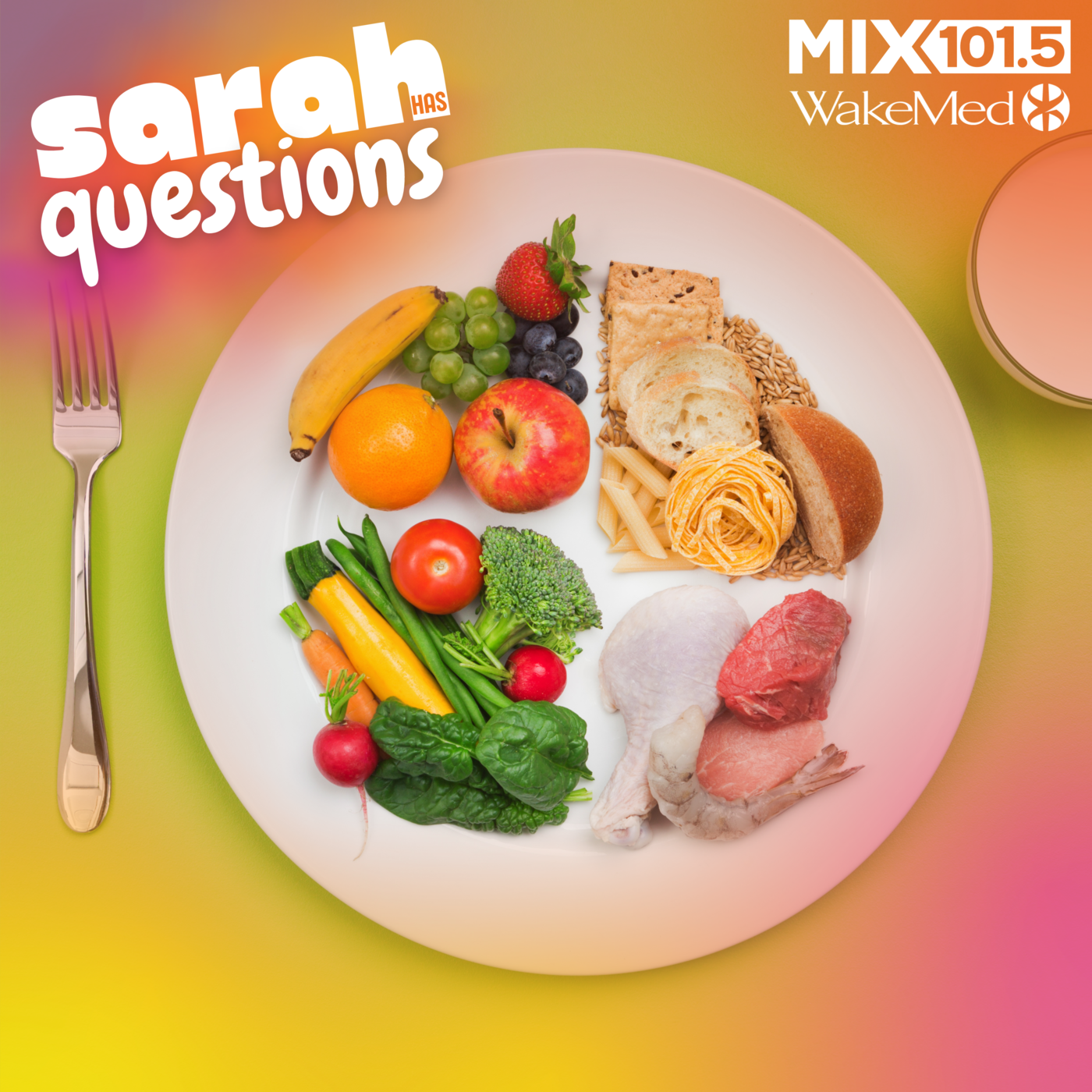
2:13 We all learned it, but this didn't make any sense. I really liked it because the bottom was carbs. And I was like, I can eat 8 pieces of bread Sure. For lunch. Yeah. Yeah. No. And I think, you know, carbohydrates are still really important. They always go through ebbs and flows where, oh, we're either demonizing fat or demonizing carbohydrates. Yes. Carbohydrates are still important on the My Plate, but it just gives a little bit of a better overview as to, okay, carbohydrates make up not just, you know, grains and breads and pastas, but they also are fruits and vegetables and beans and legumes. Yeah. And so carbohydrates are still important, but we are kinda maximizing, like, having fruits and vegetables, making sure that we are making half of our plate fruits and vegetables, but also still incorporating whole grains and then acknowledging, yes, protein still needs to be a really vital part of our plate. Dairy, if we're consuming dairy or dairy alternatives Okay. Still need to be really important. And it just gives us a better overview of, hey, fruits and vegetables, super important, but all of these things, we need greater variety of everything too. Well, my thing in in my house is eat the rainbow. Yeah. Yeah. If you have a brown plate Mhmm. You're not doing it right. Right. You've gotta have a colorful plate. Exactly. This is also a colorful diagram. Mhmm. So I wanna talk about well, you can see vegetables is the most. Yeah. And is that really any vegetables or any off limits? So no. So everybody kinda understands, thinks that corn, potatoes, things like that, they need to stay away from Okay. Because they're so high in
3:44 carbohydrates. And that's true. They are higher in carbs than a broccoli or a carrot, for example. Grains. You'd put it in a veg. Right. So, well, there is a little variation. We can get into that later. Okay. But in general general terms, we divide vegetables into non starchy vegetables and starchy vegetables. Okay. The starchy ones are the ones I just mentioned, the corn and the potatoes. So we do wanna be consuming more of the non starchy vegetables just to, you know, help maintain our carbohydrate concentration and make sure our blood sugar staying stable. But both are still important. Both still have really important uses for us. Still tons of fiber, tons of vitamins. Okay. So having both is so great. I love that potatoes are good for you. They are. That's really a gift from allheart. The most versatile they're the most versatile vegetable, I really think. So And then when I think about fruits, I think about bananas. I mean, could I just eat bananas all day long and consider my fruit done right? Well, sure. So variety is still gonna be really important. Just like in your household, you're eating a rainbow, a variety of foods. Mhmm.
4:45 Because we understand that the colors are important because they are different nutrients. They're called phytonutrients that are causing those different colors, coloring the foods, but then also doing really beneficial things in our body for us too. Like what? So Like blueberries, for instance. Right. We're always so good about blue. Yeah. So, I mean, honestly, there's a lot of food science terms here that I don't remember all off the top of my head. You didn't study and cram Smith? But we think about, like, tomatoes, for example. Mhmm. Lycopene in tomatoes, or there is a big thing for a long time about how, you know, red wine is so wonderful for us because the anthocyanins in red wine. Oh, anthocyanins sounds Greek. I know. I know. Right?
5:25 So, so those are some of the examples of the types of phytonutrients. And, you know, I couldn't sit here and kinda directly line off exactly all the benefits, but that is sort of testament to, hey, these different, nutrients are included in different color foods, different food groups by color. And they have a tons of, you know, sort of antioxidant benefits in our body, anti cancer. They can help with heart disease, blood sugar control, really everything. Yeah. And a plate full of chicken nuggets and tater tots. They're not gonna have that. Right. Right. So they'll have some you know, there's some benefits there, but certainly not all of the the benefits that we might get from a colorful, varied plate, that does include a lot of different foods. Well and I wanna talk about dairy as well because I have friends. This one friend, she gets on me. Her name's Dani, if she's listening. She she's gotten on me for years about the fact I would she always would have low fat dairy in her. Yeah. And I'm always like, don't eat the low fat stuff. Just eat the normal stuff and eat less of it. But then I'm looking at the, guidelines here, and it says, move to low fat and fat free dairy. First of all, they don't taste good. But second of all, like, what's wrong with eating, like, whole milk and whole fat yogurt? Mhmm. Yeah. So good question. So the concern with full fat dairy comes from the saturated fat content in it. Saturated fat is found in all animal products, but in greater concentrations in full fat dairy, things like red meats, that's why we stay away from the red meat too.
6:59 And so we're gonna get some saturated fat in our diet. It's totally okay. General guidelines are to less than 7% of your daily calories from saturated fat. Okay. But that being said, higher consumption of saturated fat leads to greater cholesterol, leads to greater risk of heart disease. And so if we're consuming dairy, which still has wonderful vitamin d, wonderful calcium, great protein for us, we should be choosing some of the lower fat options. So like, I totally understand skim milk looks very watery. It's the milk of ultra of milks. Yeah. Yeah. Yeah. Yeah. I mean, I think a lot of people would say it's not really milk. Yeah. But going for maybe a 1%, which is a little bit better. I think there's a different like, low fat milks taste very different than, say, non fat yogurts, for example. Yeah. Like, I think people can tolerate the yogurt a lot better than they can the milk Right. Or cheese sometimes. Because obviously, fat free cheese exists, 2% milk cheese exists. That makes me sad. It makes me angry and sad. Sure. And I can't eat any of it anyway. I'm lactose intolerant.
8:02 Yeah. But, I was gonna ask you if you don't eat red meat, is it okay to then eat more of the saturated fat, the whole milk stuff? I mean, yeah. Maybe. I think there's there's a balance in general. Like, we say red meat no more than once or twice a week anyway. So people that do eat red meat are probably, you know, we do wanna limit it in general. Yeah. So there definitely is balance that can be struck between what you do consume more of more of. And serving sizes for cheese and things like that are probably a lot smaller than we might be consuming anyway. So just in general, like, it's absolutely okay to consume the regular full fat cheese. It's okay to have sour cream. It's okay to have ice cream from time to time. But it, of course, is. It doesn't matter how much we're eating and how frequently we eat it. What gets me about all these guidelines is the fact that it's, like, this many grams Mhmm. And this this often.
8:52 And it's, like, I just wanna eat. Yeah. You know, so that's why I do the the rainbow thing. Mhmm. I'm, like, if my plate is colorful and it's mostly vegetables, I'm probably doing okay. Exactly. And I know protein's really important. I'm gonna get to a question about that Yeah. Later. Yeah. What's the biggest difference between My Plate and the Food Pyramid? Mhmm. So I think it honestly goes to what you were just saying is the food pyramid was really hard for people to kinda figure out, okay. I see this is I'm supposed to eat more of this. I'm supposed to eat less of this. But how does that actually play out in my daily food intake? And so the idea with the My Plate here is that not only should we be trying to make each of our meals look sorted to these proportions where, you know, the half plate of fruits and vegetables and then some protein and then some grains. But also, we can kinda break this down by how much of our daily eating should be fruits and vegetables.
9:43 How much of our daily eating should be protein. Because we can sort of, you know, I think it helps to break it down by the meal. So it's really really easy no matter what you're consuming to take a standard sized dinner plate, try and fill it up with vegetables, try and fill it up with some amount of protein and then, you know, okay, I'm getting a well balanced breed meal. Yeah. Let's say I have, diabetes or heart health, heart health problems issues. Is the plate gonna change for those? So there's some adaptations that we can take. For example, people with diabetes, we might, be a little bit more judicious with what we say is in the grains category. Mhmm. Because for people that I work with, I kinda tell them, hey, grains don't necessarily have to be rice, doesn't necessarily have to be pasta. It could be we could say maybe this is just starches in general. Yeah. Like potatoes. Potatoes.
10:35 We could put potatoes there. We could put maybe beans there so that we're still getting a higher carbohydrate food Uh-huh. That gives us those energy giving carbohydrates. But that might be a little bit more better, might be a little bit better for our blood sugar because they have those different nutrients. Because those are simple carbohydrate hydrates. Correct? So so there's a difference there. Okay. And so part of the My Plate is also make 50% of your daily grains from whole grain sources. Mhmm. I always tell people, make as much of that whole grains as possible. Mhmm. So the difference is thinking about, like, a white bread, for example, which is a refined grain, a simple carbohydrate, because it doesn't have as much fiber, doesn't have as many nutrients, vitamins and minerals because they've been stripped away Mhmm. In the process of creating that carbohydrate, that grain. Versus whole wheat bread, the whole grain has stayed intact. It still has all its fiber, still has all its nutrients. And so that is gonna be a complex carbohydrate. Got it. And it's harder it takes longer for you to digest and so your blood sugar doesn't spike. Is that the whole idea? Essentially. Yeah. No. That's pretty much exactly it. Okay. Alright. Cool. Yeah.
11:42 Are there things you don't like about the My Plate recommendations? And are is there anything that you any advice that you give that to your patients that's different from what the My Plate recommends? Yeah. So there's not really anything that I dislike, so to speak. The guidance giving about folks with diabetes, I actually tell that to most of the people that I meet with. Oh, interesting. Because, again, you know, the the grains, I think it can be grains slash starches. Whole grains are still really vital. They're still wonderful for us. But also, you know, it might not make sense for us to have a grain at every meal. Maybe it makes sense for us to have a starchy vegetable, or maybe we prefer to have beans. And then, again, you get more, greater variety of nutrients there. Mhmm. And your options just open up too. Yeah. And what if you're trying to lose weight? Mhmm.
12:29 What what changes about your My Plate recommendations for that? Yeah. So tricky one. That is a tricky one. And it is very person to person. I would say, honestly, like, that's kinda the whole point of My Plate is it can be used for everyone regardless of what they're going for. Vegetables are obviously gonna be really, really important for folks that are trying to lose weight. Mhmm. We're getting wonderful fiber that's gonna help keep us full, more volume. So even if we are consuming fewer calories, we're still hopefully gonna feel a little bit fuller. Mhmm. So really focusing on the vegetables on our plate, maybe increasing the protein a little bit. So we might might adjust that dividing line between the protein and the grains, so that we're having a bit more protein rather than, a larger amount of Why does it matter that protein's replacing grains? Yeah. So when we are in a or trying to be in a calorie deficit, ultimately, the goal if we're trying to lose weight is to consume fewer calories than we're, expending. Mhmm. And so protein is gonna be something where it's really, really easy for us to lose muscle mass when we are in a calorie deficit. But, excuse me, but consuming more protein Mhmm. Really, really helps to make sure that we can try and maintain as much of that muscle mass as possible even when we're in a calorie deficit. Okay.
13:46 So you'll always see, sort of, guidelines for weight loss, increase your protein, monitor really everything else. Gotcha. Yeah. And I'm seeing a lot online where that it's like, I'm supposed to be eating, like, what, like, a 1,000 grams of protein a day. Like, I don't know. Am I I feel like I'm supposed to just be, like, hanging chewing on the side of cows. Like, what what is what's the recommendations? I'm assuming they change as you go through life. They do. And I and I'm either the same for men or for women. Just talk protein for a second. Yeah. So the recommended daily allowance for protein, is point 8 grams per kilogram of body weight. And, of course, we here over here in the States use Pals. So it's Yeah. They do it a little bit differently. The King system with foots and things.
14:31 Uh-huh. So that's the guideline. That being said, and then that's for most adults. It increases a little bit once we get I believe it's 60 plus. So once we get a little bit older, having 1 gram per kilogram of body weight is what's recommended. Okay. That being said, a lot of people, myself included, believe those recommendations are a little bit low. Okay. More protein. There's been tons and tons of studies about how much protein can we eat. Is it safe for us to consume up to, like, 3 to 4 grams per kilogram of body weight? And the resounding answer so far is yes. There's really, you know, no problem. We don't have concerns about kidney health, assuming we have healthy kidneys. But to say, Henry the 8th. Hello? He had gout. Yeah. True. You know? So, like, you know and gout is from protein. Correct? So a little bit different. Okay. Not my average cheese. Yeah. You have to go on that road. But I just know that eating meat a lot of meat is all I always thought it was, you know, up until recently, kinda unhealthy. Yeah. And that's where the types of proteins we consume really comes into play because we 100% can have a ton of protein every day from red meats and processed meats and full fat dairy. And, yeah, that might not be the best thing for us, but that's not necessarily because of the protein. It's probably from the saturated fat. Gotcha.
15:48 So you so you want lean proteins Right. And, like, plant based proteins like tofu and beans and things like that Exactly. And cheese for those lucky people out there who can eat them. Yeah. Alright. And is there, any recommendation that has changed during your tenure in this field that has surprised you? That's a great question. You know, not really. But I think it always that's the thing I think about science is it's not so much the recommendations change because they don't change quickly at all. Yeah. But the trends change. So we think about, you know, it's the keto. We're we're keto right now. Everybody's keto. Everybody's ultra low carb. That's nothing new. No. You know, we used to have the South Beach, and we used to have Atkins. Or Atkins. I know. It really it I mean They just didn't brand properly. I don't know. It's I don't know what to say.
16:35 Like Well, he also died because he had a bad heart because all he ate was me. I'm like, you were a little on balance there, doctor Atkins. Yeah. Yeah. And now here we are back on keto. But I am. Don't really well, we're actually it's funny. You made the transition for me. There are a lot of trendy diets Yeah. Out there right now, and top of the list is keto. So from what I've understood because I read a lot about, weight loss and anti diet stuff because I had an eating disorder at one point in my life, and I've always struggled with my weight. And so this is near and dear for me. Sure. And keto, from what I understand, was for epilepsy. Correct? It was. Yeah. Yeah. Yeah. An original. And it because it if you follow this diet, which I'm gonna ask you to explain here in a second, you would have less seizures. Mhmm. So what is keto, and where is it going wrong Yeah. Or right? Mhmm. And I I'm sorry. I came with a bias. Yeah. Well, you'll hear my answer here in a second. I feel like we're on the same page Yeah. But I could be wrong. Yeah. So, yeah, you're totally correct. So, keto, it wasn't called, you know, the ketosis or whatever. Wasn't called keto initially. That's sort of the rebranding that's occurred. But just being on an ultra low carbohydrate diet has been proven to reduce seizures in children. And so that's kind of the origins of it. Mhmm. And so that's kinda the origins of it. Mhmm. It's still very, very successful for that purpose. Great. But then, of course, people caught on. They were like, okay. So if I eat very, very low carbohydrates, then I'm gonna go into ketosis and then I'm gonna lose weight. Right? Mhmm. You know, that's one of the things that's all that matters in this world. Exactly. Yeah. Exactly. Same page.
18:07 And so then people just got sort of word-of-mouth, and then people started studying it more. And then, of course, now in the age of social media, we have influencers who are, you know, going on. Doctors or nutritionists. Exactly. Exactly. People that are, you know, only kinda using their own information and their own anecdotal infer, experiences Yes. To guide what they're telling other people. Right. And it worked for me, so it must be good. Exactly. But there's so much more. Like, even during COVID, anecdotal evidence was going around, but, like, it it was still no matter how many people told you, that's still an insanely small amount of people versus the number of people on this planet. Exactly. Yeah. Exactly. So so keto is just low carbs. You don't eat sugar. You don't eat any kind of carbohydrates at all. So it's ultra low carbohydrate. So to so it doesn't necessarily mean no carbs. Okay. It's very very hard to be on a completely no carbohydrate diet. So I think the general term the general recommendations are if you're going to be in ketosis, meaning your body is no longer primarily using ketosis, meaning your body is no longer primarily using carbohydrates as its main energy source, it switches over to using fat as its main energy source. Then if you're gonna go into ketosis, you need to be consuming something like less than 50 grams of carbohydrates a day. And how many should you have a day roughly? For the average person, it's far higher than that. I would say, you know, probably the average person's 250 grams daily. Okay. So that is substantially lower. It is. And and so, basically, they consume this ultra low carb diet.
19:41 They are consuming some amounts of carbs, but they would choose, you know, vegetables which are lower calorie, lower carb. So they're still getting some of those carbs and they're still getting a little bit of fiber, but really just not much at all. What's the danger? Right. So it really comes from just, you know, very little fiber. Fiber is wonderful for our digestive system. And so we do, sort of, have a lot of concerns about, okay, these folks are consuming very little fiber. Mhmm. Does that put them at risk for, you know, things like, colorectal cancers or different types of digestive disorders later on down the line? That's a main concern. Mhmm. But we also have to think about where are they getting their other nutrients from. Yeah. And because a lot of them, obviously, are consuming higher saturated fat proteins.
20:28 Yeah. And because they're having a this very high fat diet, They will consume some healthy fats, but probably a lot of a greater concentration of those saturated fats too. Mhmm. And so we'd worry about heart disease and and sort of other conditions that, that might be of concern. We'll be right back because you know I have more questions. And so is the same kinda true for the paleo? Paleo diet is the pit what is the paleo diet just quickly? So it's essentially, like, the hunter gatherer Yes. I mean diet? I mean, it's it's, like, from my the paleolithic. That's the word I was looking for. Yeah. And I love that they're, like, that's how we're supposed to eat. And I was like, yeah. People's life expectancy was, like, 30. Yeah. Was, like, 30. Yeah. There's a lot of things we were supposed to do that we're no longer doing for good reason. Really ideal?
21:14 Yeah. So isn't it kinda similar to keto? So it's not necessarily, but it only, it's not as restrictive with the carbs and, like, forcing the fats. It's just saying, okay, you're only consuming these foods that we could otherwise get from the the the ground. You know, if if industrial farming was not ever created They're practicing for the apocalypse. Apocalypse. Yeah. I mean, yeah. I I would say that's a good good description. I was recommended intermittent fasting Yep. Once. Yep. And, I was kind of insulted. So I'm like, I don't I don't know. I have issues with people telling me to lose weight. So what what intermittent fasting? Talk about that. Mhmm. So it's exactly what it sounds like. It is this idea where, we cert only eat.
22:01 We designate ourselves to a certain eating eating window, and we can only consume calories during that time frame. So a lot of people will do, the, it's like, 16:8 is the common one where 16 hours off, 8 on. Exactly. Yeah. So no eating for 16. Mhmm. And it's just basically creating calorie deficit by starving yourself during that time. Right? Exactly. And then what are the negatives for that? So a lot of research is being done on intermittent fasting right now, so we'll kinda see. But I think a lot of things we might be concerned about is for folks with, some people who have diabetes might experience hypoglycemic instances where their blood sugar is lower than it should be. For those people, intermittent fasting might not be for them because we don't want them to fast if they are in a low blood sugar state. Mhmm. So but for the average person, it tends to be okay. I would I would say as diets or diet patterns go Okay. Intermittent fasting is maybe one of those that's a little bit better, so to speak. Uh-huh. But that being said, it also really matters too not just how long you're eating, but what you're consuming during those hours. Right. So the food you're consuming during that time is still really, really important to get balanced. You mean I can't eat a dozen Krispy Kreme? That's not really gonna work so well. That's not really how that works. But that's what happens when you don't have something. You you you restrict yourself. You're like, oh, god. And then your body takes over, and you're you lose control. Yes. No. I always tell people straight up whenever I start meeting with them, hey. I'm not the dietitian that's gonna tell you you cannot eat these foods. I want you to eat everything. I eat everything. I want
23:32 that for you. I want you to enjoy food, but we're gonna find some balance. We're gonna talk about what can we add rather than what can we take away from your diet. I have I might need your card after this. Come chat with me. I will. This one, I think, has always been a favorite of mine, the blood type diet. Because first of all, it's I mean, it it is intriguing because we do have different types of blood. Yeah. As a lactose intolerant person, as a type b on this diet, I have read this book. Mhmm. I'm supposed to eat a lot of dairies. Funny how that works. Funny. Yeah. A terrible idea for me. So I'll give the shortest synopsis. The blood type diet is you are supposed to eat certain food profiles for your different blood type. Right. So what do you think about this diet? I mean, there's there's no research behind it. Like, there's really no science.
24:17 I've these things always come out all the time where it's personalized. It's gonna be for you. And then you do a little bit bit deeper digging, and it's like, this isn't personalized. This isn't for me. I mean, you would have to eat a ton of lactose. Like, that's not gonna work for you. I would lose weight, but it'd be painful and gross. Awful. Yeah. Horrific. You'd be so ill. Oh, it'd be horrible. The Mediterranean diet, I'm a fan of this diet. Yeah. So talk about that. Me too. So the Mediterranean diet is essentially guiding your food consumption based off of, cultures in the Mediterranean surrounding the Mediterranean Sea Mhmm. And trying to mimic the way that they eat. Because there was some research years years ago about how these people are living longer despite the fact that they might not have as much access to health care as other people do. Interesting. Okay. So there were definitely they were seeing some associations saying, okay. Well, maybe it's related to the food they eat.
25:10 So diet heavily surrounds, healthy fats. So things like olive oil and nuts and seeds, fatty fish, which they have in abundance. Sure. More so than perhaps we do in a landlocked area. It's like salmon and mackerel and things like that. Yeah. Exactly. So they focus a lot on that. They also do a ton of plant based foods. So lots of vegetables, lots of fruits, beans, more plant based proteins, less animal proteins. Yeah. And they also consume full fat dairy. So that's something to add on there. Yeah. If I could eat dairy, I'd be eating so much. Uh-huh. Oh my god. Alright. So I'm gonna do some kind of well, I guess, let's just move on to one more diet, then I wanna give you some quick quick fire. Yeah.
25:55 Oh, gosh. There's so many here to choose from. Noom. Do you know about Noom? I do. Yeah. Talk about that. Yeah. So it's kinda the idea of it's it's not really reinventing the wheel, but it is giving you, you know, the likes considering, like, a Weight Watchers. It's similar to a Weight Watchers approach in that you're still kind of guided in, hey, here's what you should eat, can eat. But just like Weight Watchers, it does give you it doesn't do the points. Mhmm. But it does say, hey, these options are on the table for you. You don't necessarily have to be super restrictive. Mhmm. That being said, they do still, you know, track your weight. They do still do some of those things. They give you calories. Like, in how many you're supposed to have a day. Exactly. Yeah. May not necessarily be super personalized to you. What bothers me about Noom is that, you know, they do the psycho psychological thing. Like, why are you eating at night? Why are you eating when you're sad? Right. And that's all great to to get to dive into. Yeah. But what I don't like is that they call it not a diet. Yeah. And it is a diet. It's a 100% a diet. It is. Yeah. Yeah. Because they lean into the mindful eating piece, which is wonderful. Yeah. Absolutely. Really, really helpful.
27:03 Absolutely. But they're they're doing it wrong. Yeah. Because that's the whole point of intuitive eating is to not do the diet after this. Eating. Oh, man. I I wish I could talk to you for 2 hours. I have so many things to say. Alright. I'm gonna skip a couple of these other ones. Let's go to, some 3 quick fires. 1 Sure. I keep seeing on Instagram mushroom powders Mhmm. Mhmm. And for, like, coffee. What's what's going on with these? Honestly, I don't know. It's it's one of those things that's just kinda crazy and out there. But, mushrooms are good for you. They have they have good nutrients in them. Putting them in coffee doesn't really seem to really do anything different. I it doesn't say I I haven't tried them, I'll be honest. But it doesn't really sound that great. If you wanna get more nutrients by putting those in, great. But just know that you're probably spending a lot of money and maybe not getting that much more benefit. Yeah. Well, you could just just go buy a thing of mushrooms and eat those at home. Freaking mushrooms. Yeah. How about green powders?
27:52 Because I see, athletic greens is what I hear a lot about. Yep. And it sounds great. All your nutrients in 2 scoops. Yeah. And you don't have to worry so much because it does seem, like I said earlier, you gotta count all the grams. You gotta make sure you get this in and this in. And it it would be nice to just scoop it into a drink. Yeah. Sure would be, which is why people do it. They want the convenience. They believe that they can maybe not eat as many fruits and vegetables by doing those. And just chugging it down. Yeah. And that's the thing with all supplements is that we kinda understand that when supplements are added to a powder or something like that, our body may not absorb and utilize those vitamins or minerals as well as it does when we're getting those same nutrients from food. Because in food, those vitamins and minerals interact with other vitamins and minerals. Kinda like beans and rice.
28:41 Right? Like, beans and rice together make a protein Exactly. But not alone. Right. Interesting. Complete protein. Yeah. Yeah. So yeah. Okay. And then this one, I'm really curious because we do seem to be a lot on the same page here. Cleanses. Gotta love a cleanse. Oh my gosh. Yeah. A really expensive laxative. Yes. That's a pretty easy way to sum it up. Yeah. Yeah. And then as soon as you start eating food again Mhmm. Everything goes back to normal. Yeah. You just lose a lot of water weight, but it's a unhealthy process. You could be dehydrating yourself. And, yeah, you're gonna cleanse your body. You're gonna feel it. Yeah. And you're maybe gonna feel okay afterwards, but it's really just you've lost water weight and there's there's really nothing that's gonna stick with you. Okay. And you mentioned and this is something I've read the book on this too, intermittent fasting.
29:29 Yeah. Not intermittent. I'm sorry. That's not the right word. Intuitive eating. Mhmm. I'm a fan of intuitive eating. Yeah. And I've had I have spent a lot of time working on that as someone who had an eating disorder Oh, yeah. Where I couldn't trust my body and I learned to ignore my hunger cues and things like that. So talk about what are your thoughts on that? I'm curious. Yeah. So I think intuitive eating, I, you know, use a lot of those practices when I'm working with patients myself. It is definitely focused much more on how does your body feel around food. Mhmm. Puts all foods on the table. It is neutralizing all foods. So There's no bad foods. There's no bad foods. There's no good foods. They just serve different purposes in our body. Yeah. And it gives us the opportunity to eat foods in a way that feels good for us. We're honoring our hunger cues. So we're trying to eat when we're hungry, pay more attention to those Yeah. Because we it's easy to lose it. Oh, yeah.
30:19 And then we're trying to stop when we're full. So it does kinda naturally encourage us to avoid, sort of, eating beyond satisfaction, overeating, but it also makes sure we're eating enough and kinda takes away some of that judgment that we put on food. Which is so hard. I mean, I'm so sick of people who tell, oh my god. I'm being bad. I'm getting french fries. Oh, yeah. I'm like, would you stop and just eat the freaking french fries? Enjoy them. Yeah. They're french fries. They're delicious. Just don't eat them every day. Sure. Yeah. Okay. If somebody wants to see a nutritionist Mhmm. How do you go about doing it? Do you need to go through your, primary care and get a referral? Can I just can I just go in and see you? Yeah. So it kinda depends who you're seeing. At WakeMed, they require physician referrals just to make sure that all is covered, under your insurance plan. So getting a physician referral, talking to your primary care doctor saying, hey. I wanna see a dietitian. If you're meeting with WakeMed outpatient nutrition, you can just sign up on the MyChart app. So it's super convenient. Ultra processed foods are coming under the gun. They are. And I understand that to mean, like, Lays and Cheetos and anything that's, like, you know, fluorescent colored. But, also, from what I understand, a lot of the oat milks and, almond milks and the fake cheeses Yeah. And as someone who's lactose intolerant and has no choice, am I gonna die? No.
31:38 No. No. No. No. But yes. They would make you believe that you were. Yes. It is. It's it's processed foods, ultra processed foods. So the way I kinda clarify it for people that I work with is there are different levels of processing, and there's also different nutrients that go into processing. So, yes, some ultra processed foods have tons of added sugar. They have sodium added. They have lots more saturated fat. And so those are the types of processed foods that we would want to limit. I see. Just like we would wanna limit a higher saturated fat, you know, meat. Meat is not ultra processed, but it's still higher in saturated fat, and we would still wanna limit it. Right. Okay. But there are lots of ultra processed or more processed foods that, as you said, the oat milk or protein powder, baby formula, all of these are ultra processed if we're gonna use their own verbiage. But But we obviously understand that these are essential they have essential nutrients Especially the baby formula. Yeah.
32:35 There's a million reasons to use them. And so it's all just clarifying, and it's a gray area that people don't people like black and white. Nutrition is never gonna be a black and white thing. Oh my god. I could talk to you forever. Thank you so much for coming in today. Thank you for having me. Even keeled, and I I just think that you're a great nutritionist. Thank you so much. You're welcome. You don't need me to tell you. If something sounds too good to be true, it probably is. My mom's told me that a 1000000 times. Well, keep it in mind as you surf around the web and surf around social media, if this conversation we had today leaves you thinking that you might wanna meet with a nutritionist, well, check your insurance. It could be part of your coverage already. My guest was Marissa Robinson. If you like this episode, please pass it on. Just hit that share button and send it along to a friend. And if you feel so inclined, leave us a 5 star review. It helps people find us. See you next time.


